
Exploring the online Casino Lyra Bet landscape for a visually impaired player presents unique challenges. This review delivers a detailed, first-hand look of Lyra Bet Casino’s accessibility features for UK users using screen readers. It evaluates the entire user journey, from account creation and deposits to game navigation and customer support, offering an objective analysis of where the platform excels and where there remains room for improvement.
Financial Transactions: Funding and Payouts
Handling money is a critical and sensitive part of any casino experience. The cashier section of Lyra Bet Casino was, encouragingly, one of the more accessible areas. The deposit and withdrawal pages used simple, conventional HTML form controls. Payment methods like Visa, Mastercard, and e-wallets like PayPal were listed with accurately identified radio buttons or links.
Form fields for entering amounts and picking transaction types were announced correctly. Transaction history was presented in a table format that, while basic, was navigable by the screen reader, enabling players to review dates, amounts, and statuses. The clarity and consistency in this section provided a sense of security and control, illustrating that with careful design, complex financial interactions can be made accessible.
Key Safety and Authentication Details
During the verification process, which is a standard regulatory requirement in the UK, users are required to upload documents. The file upload controls were accessible, but the instructions for what documents were needed could have been more detailed auditorily. Furthermore, any pop-up modals or security confirmations during transactions were generally focus-trapped and announced, which is a best practice for avoiding player confusion.
Ultimate Verdict on Lyra Bet’s Availability
Lyra Bet Casino shows a foundational understanding of web inclusivity, with its core website layout, navigation, and cashier sections including key principles that allow screen reader users to perform essential tasks. A visually impaired player can effectively create an account, deposit funds, browse the game lobby via search, and navigate to support. This baseline level of access is admirable and places it ahead of many rivals who neglect even these basic necessities.
However, the experience fractures substantially at the point of play. The inaccessibility of the vast majority of casino games, particularly slots and live dealer games, represents a significant barrier. This transforms the experience from one of independent engagement to one of limited monitoring. The dependency on third-party game software is a recognised industry-wide issue, but it remains the critical boundary for true accessibility.
For UK players who use screen readers, Lyra Bet offers a platform where administrative and financial control is available, which is a major positive. Yet, the core entertainment product—the games themselves—remains largely out of reach without visual assistance. The platform has a solid and usable skeleton, but the interactive, game-playing flesh on those bones is, for now, mostly unreachable. Continued efforts to work with game providers on usability and to enhance in-house descriptive overviews for promotions and tools would significantly improve the overall interaction.
Comprehending Screen Reader Accessibility in Online Casinos
For many players, availability is an oversight, but for those with visual impairments, it is the gateway to involvement. Screen readers are software tools that transform on-screen text and components into speech or braille. In the setting of an online casino, this means every button, menu item, game state, and financial detail must be systematically labelled for the software to interpret and convey accurately to the user.
True accessibility goes beyond basic conformity; it creates a flawless, independent, and satisfying experience. It includes clear navigation, logical page structure, descriptive links, and properly tagged images and form fields. For a platform like Lyra Bet Casino, which offers a rich array of games and features, ensuring these elements are accessible is a significant task that directly impacts user autonomy and satisfaction.
Promotions and Bonus Terms Readability
Bonuses and promotions are a significant draw, but their intricate terms and conditions are often a hurdle. Lyra Bet’s promotions page listed offers with well-defined headings, making it straightforward to review different bonuses. Clicking on a promotion, however, took to a page with heavy text specifying the wagering requirements, game contributions, time limits, and other rules.
While this text was readable by the screen reader, the vast volume of formal language was challenging to comprehend auditorily. Key points were not condensed or emphasized programmatically. A optimal practice for accessibility would be to offer a simplified, bulleted rundown of key terms at the beginning of each offer page before the full legal text, permitting all users, including those using screen readers, to swiftly absorb the critical conditions.
- The bonus offer title and short description were typically clear.
- Wagering requirement multipliers were placed in long paragraphs.
- Lists of excluded games were often long and tough to navigate.
- Important dates and time limits were not regularly highlighted.
Support Services and Player Protection Tools
Available customer support is essential. Lyra Bet offers multiple contact channels. The live chat function, which opened in a separate pop-up, was reasonably accessible. The text input field and send button were marked, and new messages from the support agent were announced as they arrived, allowing for a functional conversation. The FAQ section was organized with clear headings, enabling easy navigation through questions and answers using heading shortcuts.
The responsible gambling tools section, a vital area for all UK players, was accessible but could be more straightforward. Options for setting deposit limits, session reminders, or taking a time-out were available, but the process for activating them involved several steps without persistent, clear auditory confirmation at each stage. Given the significance of these tools, streamlining their accessibility should be a high priority.
Clearness of Communication
On the whole, support communications were understandable and simple when received. Any emails or messages sent to the user used plain language, which is beneficial for screen reader users who must listen to information sequentially. The lack of overly complex jargon in standard communications was a positive aspect of the Lyra Bet experience for all users, including those with accessibility needs.
Navigating the Game Lobby with a Screen Reader
The game lobby is the heart of any online casino, and its accessibility is essential. Lyra Bet’s lobby displayed games in a grid format. Each game tile featured the game’s title, which was read aloud by the screen reader. This basic level of identification was functional, but the experience lacked depth.
There were no additional auditory cues or descriptions about the game type, volatility, or theme beyond the title. While a sighted user can obtain this information from visuals, a screen reader user must rely solely on text or audio descriptions. The absence of filter descriptions for categories like ‘New Games’, ‘Slots’, or ‘Jackpots’ also posed a challenge, as selecting these filters did not always result in a clear auditory confirmation of the change in content.
The Search Functionality
The search bar was properly marked and easy to locate. Typing in a game name produced predictable results, and the search results were announced in a list. This was one of the most reliable methods for a screen reader user to find a specific title without having to browse through the entire game library, underscoring the importance of robust search tools in accessible design.
Engaging in Casino Games: Slot Machines and Casino Table Games
Accessing a game posed the most significant accessibility hurdles. It is important to note that the core game software is typically developed by third-party developers like NetEnt, Play’n GO, or Pragmatic Play, and their accessibility standards differ widely.
Slot Game Experience
Upon loading a popular slot, the screen reader often had difficulty. The game canvas, where the reels spin, was frequently labeled as a “graphic” or “application” with no further usable information. Game controls, such as ‘Spin’, ‘Bet Size’, and ‘Auto Play’, were sometimes not selectable or readable. Critical information like current balance, bet amount, and win amounts were not consistently announced following a spin.
This produced a situation where the player was effectively playing in the dark, reliant on sound effects but without concrete, spoken confirmation of game state. Some modern HTML5 slots from progressive developers provided slightly better integration, but the experience remained largely inconsistent and frustratingly opaque.
Table-Based Games and Live Casino
The situation was comparable for classic table games like blackjack or roulette. The static versions often appeared as graphical tables with no textual alternative for the screen reader to interpret. The Live Casino section, powered by video streams, presented an even greater challenge. The live dealer, table action, and chat were purely visual and auditory without any complementary text stream, making it impossible for a screen reader user to participate independently in these real-time games.
Initial Thoughts: Registration and Browsing
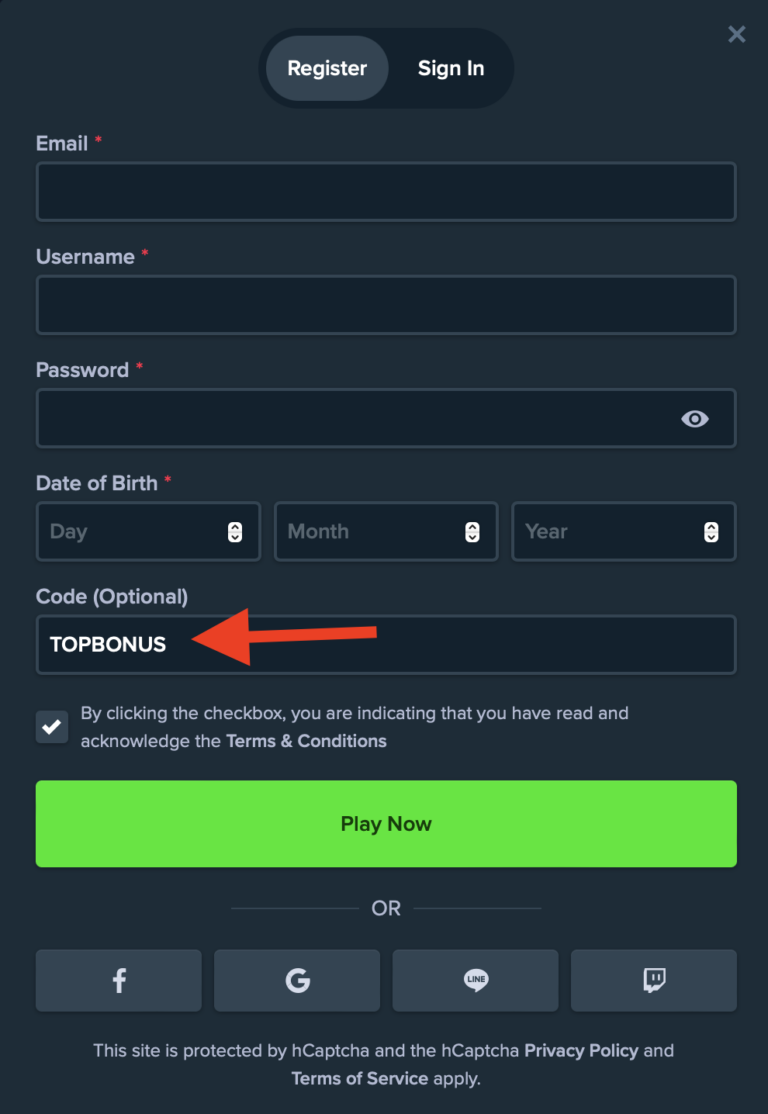
The first interaction with Lyra Bet Casino defines the experience for the entire experience. Upon landing on the homepage using a widely used screen reader including NVDA or JAWS, the structure was generally logical. Landmark regions, such as header, main, and footer, were accurately identified, allowing for quick navigation of the page’s key sections. The registration form provided a varied experience, however.
Field Identification and Mistake Messages
Most input fields for setting up an account, such as username, password, and email, were correctly labelled, helping the screen reader to state their purpose clearly. This made the initial data entry process fairly straightforward. Nonetheless, whenever a validation error occurred, for instance an invalid postcode format, the error message was not always announced automatically by the screen reader.
This demanded the user to actively navigate backwards to the field at issue to hear the error, generating a small but perceptible interruption to the flow. Clear, immediate auditory feedback for errors is a crucial component of an accessible form, and this is an aspect where Lyra Bet could improve its user experience for sightless players.
Central Menu and Page Structure
The main navigation menu was a strong point. Items were announced in a sensible order, and sub-menus were suitably indicated, permitting for effective browsing to important areas like ‘Casino’, ‘Sports’, ‘Promotions’, and ‘Support’. The use of ARIA (Accessible Rich Internet Applications) landmarks was clear, supplying shortcuts to different page regions and substantially speeding up navigation.










 210 99 66 993
  info@enerco.gr